The Chemist
Neurons, synapses and the fuel bill behind perception — at rest as much as at work, and what that bill buys in speed.
Your brain is two percent of your body weight and burns a fifth of your energy.
I write about what it costs a nervous system to build perception, culture, belief and the self — and what changes once you can see the wiring doing it.
Bodies and brains are in-time, dynamic chemical configurations — arrangements of ions and membranes that happen to deliver the wonderful experience of being alive. A neuron is an ion pump, held at a voltage just below firing so it can spike the instant it's needed. That's what the energy above is spent on: keeping billions of those pumps charged and ready, whether or not a spike ever comes.
To decide, at the root of the word, means to cut something off.
A brain doesn't fail to represent the world in full — it isn't supposed to. An organism has to move, eat, flee and mate in real time, and the only way a nervous system does that is by cutting a continuous, changing world into edges and thresholds fast enough to act on now. Full fidelity wouldn't be a better brain. It would be a slower, worse one — one that thinks clearly and dies deciding.
Culture runs on the same logic. Norms and values get paired and calibrated in bodies and brains — through ritual, language, food and gesture — because deciding everything from scratch, every single time, would be too slow to live by. Learn a habit well enough and it stops feeling like a habit. It starts feeling like a fact about who you are.
Everything on this site traces back to that one fact: a brain built to decide, not to describe — cutting a rich, continuous world down to whatever it can act on in time.
Same brain, same energy budget, five different ways in. A talk, a story, an essay or a conversation — whichever fits the room.
Neurons, synapses and the fuel bill behind perception — at rest as much as at work, and what that bill buys in speed.
Ritual, language, food and gesture, wired into muscle and nerve until a learned habit stops feeling learned and starts feeling like you.
Perception runs on shortcuts, not full information. What that means for certainty, belief, and the stories a mind builds to fill the gaps.
A closer look at habit, ageing, desire and the discomfort of catching your own wiring in the act.
Distance from a problem changes how a mind can afford to think about it — and who ends up deciding whose account counts as neutral.
And underneath all of it is one question:
What does chopping a rich, continuous world into fast edges cost
us?
What does it cost your brain to build the world you think you're just observing?
A set of essays on perception, science, belief and religion, all traced back to the same organ and the same budget as everything else here.
Culture isn't information passed from one head to another.
It's wiring: habits, rituals and beliefs installed in the body until a group's patterns start to feel like private, personal truths.
Some ideas work better outside a book.
I run talks, stories, conversations and salons built around these questions — places where an idea meets a room of actual people and gets tested.
Not every idea needs a lecture. Sometimes it needs a story. Sometimes a plain question. Sometimes a room that stays quiet a beat too long.
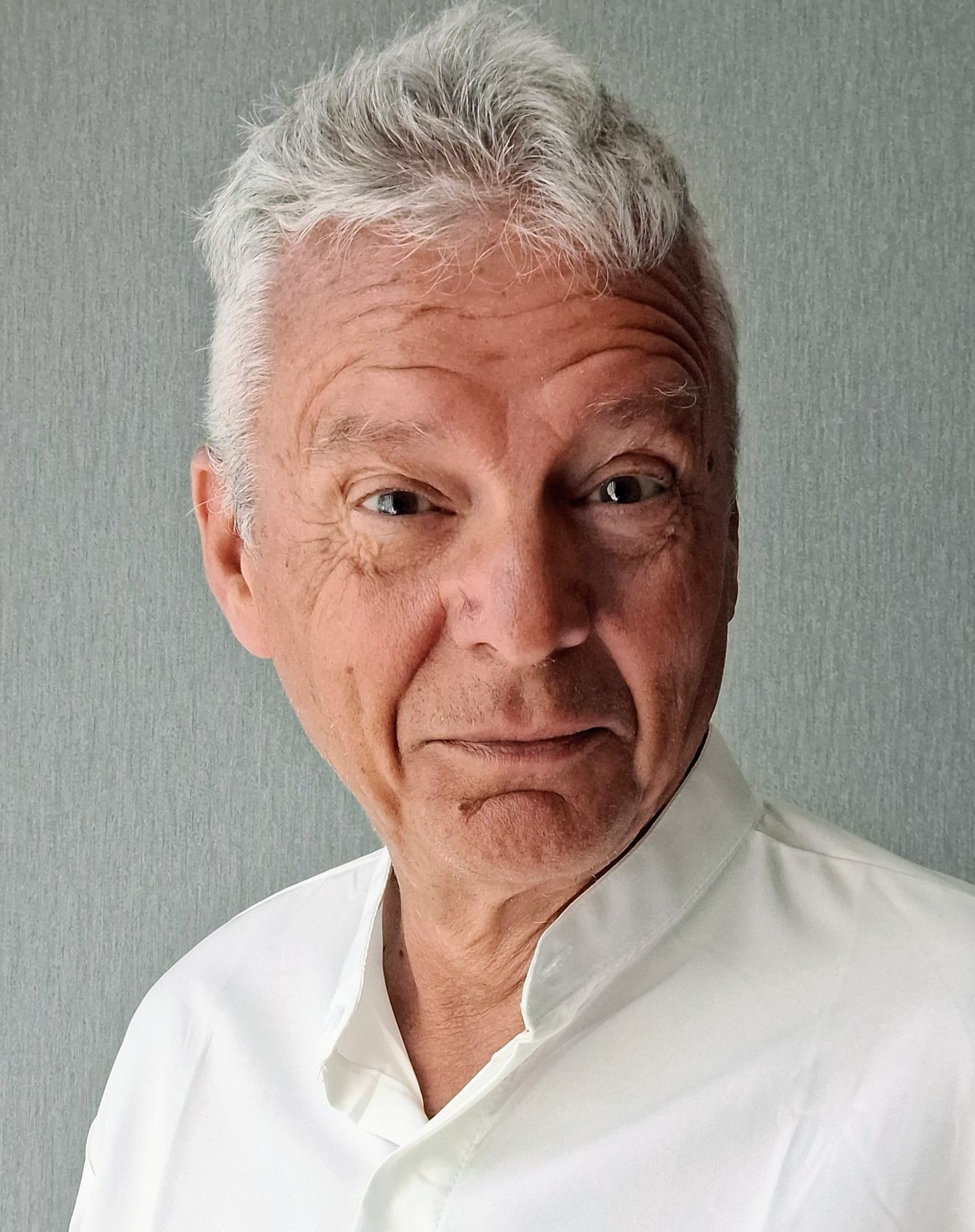
Willem DeWit is a cultural anthropologist, writer and independent researcher based in Amsterdam.
He studied cultural anthropology at the Vrije Universiteit Amsterdam and did fieldwork in Senegal, the Gambia and Mauritania, later studying mosque communities back in Amsterdam.
His work has moved toward one question: how much of what a person calls reality is really a shortcut, built by a mind trying to stay inside its energy budget?
He now works across anthropology, neuroscience, evolutionary biology and the chemistry of the body — wherever that question leads.
The research is only half of it.
The other half is finding out what happens when you actually live by what the research says.
Talks, storytelling, conversations, festivals, universities, cultural programmes, or simply an interesting room full of people.